 Skip to content
The Real Details of Lithium-Ion Counterbalance Forklift Trucks
From their first deployment on the UK’s MHE market, lithium-ion forklift trucks have quickly gained market share and transformed operations towards more ecological and economic sustainability. With a quicker ROI due to the lower total cost of ownership, reduction in environmental pollutants, and their ease-of-use, lithium forklifts are the first game-changing product the industry has seen in over a decade.
With such a rapid rise to popularity, these products raise serious questions about the feasibility and effectiveness of lithium forklift trucks for business operations across all sectors such as building suppliers, port operations, food & beverage production, and more. We have put together a quick 2-minute read below answering some of the most pressing questions which often lead to anxiety regarding this new type of product with the aim of clarifying how Fork Truck Direct have deployed these products across hundreds of businesses in Essex, Suffolk, Kent, London, East & West Sussex, Norfolk, Hertfordshire, Cambridgeshire, Buckinghamshire, and Bedfordshire. For more information on how these products can revolutionise your operations while slashing costs, contact us today.
| Question | Answer (Summary / Key Points) |
|---|---|
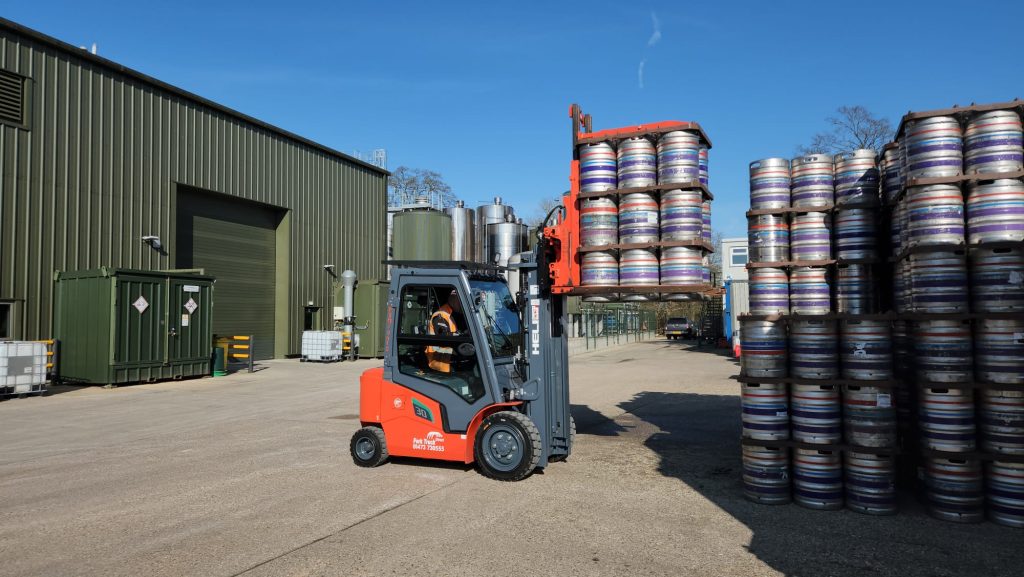
| Can lithium forklifts be used outdoors? | Yes — modern lithium forklifts such as the HELI G2 feature sealed IPX4-rated battery compartments, ideal for yard and warehouse use on hardstanding surfaces. |
| How long does it take to charge a lithium forklift? | Around 1.5–2 hours to charge from 20–100 % with a 200 A three-phase charger. Opportunity charging during breaks keeps trucks running all day. |
| What is opportunity charging and does it harm the battery? | It means topping up the battery during breaks. With lithium (LiFePO₄) cells, it’s safe and extends uptime with no cycle-life penalty. |
| How long do lithium forklift batteries last? | Typically 3,500 – 5,000 cycles (8–10 years) depending on usage and temperature. |
| Are lithium forklifts more expensive to buy? | Upfront, yes – but TCO is lower. You’ll save 60–80 % on fuel and 40 % on servicing, with ROI in 2–3 years. |
| Do I need special infrastructure for fast charging? | A three-phase electrical supply and a matched HELI charger are sufficient. Smaller sites can use single-phase onboard chargers for overnight top-ups. |
| Are lithium forklift batteries safe? | Yes. LiFePO₄ chemistry plus a Battery Management System (BMS) protects against over-charge, short-circuit, and overheating. |
| Can I retrofit lithium batteries into existing forklifts? | Sometimes – depends on truck model. Purpose-built lithium models like HELI G2 offer the best safety and warranty support. |
| What tyres are best for yard work (not rough terrain)? | Pneumatic or solid-pneumatic tyres provide the right mix of comfort and traction on concrete/asphalt yards. |
| How do lithium forklifts support ESG and compliance? | Zero emissions, low noise, improved air quality, and measurable CO₂ reductions help with ESG and tender scoring. |
| What capacity and charger size do I need? | Match the truck to your heaviest load (usually 3.5 t @ 500 mm LC). Charger sizing depends on shifts, hours, and desired top-up windows — we model this for you. |
| What warranties and service cover should I expect? | Look for multi-year battery warranties, guaranteed response times, high first-fix rates, and local spares availability. |
For more specialist and tailored information on you can make lithium-ion counterbalance forklift trucks work for your business, contact us today.